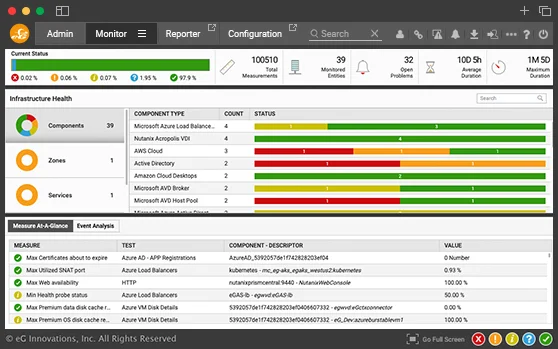


eG Enterprise is the only solution providing inside and outside views of virtual desktops that help Citrix admins get unparalleled insights into Citrix Virtual Desktop performance. Monitor user experience, performance of each VDI tier, identify potential bottlenecks and even remediate them automatically.
Free TrialTrusted by leading companies


eG Enterprise is a Citrix Ready certified monitoring solution purpose-built for Citrix virtual apps and Virtual Desktops technologies. Incorporating deep domain expertise and embedded analytics to provide automated root-cause diagnosis, eG Enterprise delivers performance assurance for the entire Virtual Desktops infrastructure - from user to virtual desktop, virtualization to storage, network to cloud.


Automated Diagnosis

Proactive Alerting

Powerful Analytics & Reporting


With eG Enterprise, an end-to-end monitoring, diagnosis and reporting solution for Citrix Virtual Desktops, you can:


Whenever end users complain about performance problems, we can quickly and easily pinpoint the real cause using eG Enterprise, whether it’s the network, an application or actually some aspect of Citrix itself.

eG Enterprise is a purpose-built monitoring solution for the latest Citrix architecture. It supports the latest Citrix protocols, new features and support both on-premises and cloud-hosted deployments.
eG Enterprise delivers in-depth visibility of Citrix virtual desktop logon times. Combining Citrix logon performance metrics from the Delivery Controller and the virtual desktops, eG Enterprise allows Citrix administrators to easily isolate which step of the logon process is causing slowness for end users, and fix the problem before business impact.

 |
Track over-utilized and under-utilized desktop VMs (guest) |
 |
Identify what user activity and application access inside a VM causes increased resource consumption |
 |
Auto-correlate server virtualization and desktop virtualization metrics to pinpoint the root cause of user experience issues |

Virtual Apps | Virtual Desktops | XenMobile | ADC | StoreFront | PVS | Citrix Cloud | SCOM Management Pack
Citrix Ready certified for all products in the Citrix stack