How does eG Enterprise monitor Brocade SAN Switch?
eG Enterprise monitors the Brocade SAN Switch using an eG external agent. This agent can be deployed on any remote host in the environment. This agent is capable of monitoring the Brocade SAN Switch
- By polling the SNMP MIB of the switch;
- By connecting to the switch via SSH and running CLI commands;
Pre-requisites for Monitoring the Brocade SAN Switch
To enable the eG agent to collect performance metrics from a Brocade SAN Switch, the following pre-requisites should be fulfilled:
- The Brocade SAN Switch should be SNMP-enabled.
- The eG agent should be able to access the target switch over the network.
- The eG agent should be able to communicate with the target switch via SSH. For this, specify the SSH port (default port: 22) in the test configuration page and ensure that the SSH port is opened on the firewall (if any) between the agent and the target switch.
- Configure the credentials of a user who can access the target switch via the SSH port. This can be achieved when configuring the tests using the eG admin interface.
Once the above-said pre-requisites are fulfilled, manage the Brocade SAN Switch component using eG administrative interface. The steps for achieving this are discussed in the Managing the Brocade SAN Switch
Managing the Brocade SAN Switch
The eG Enterprise cannot automatically discover a Brocade SAN Switch so that you need to manually add the component for monitoring. To manage a Brocade SAN Switch component, do the following:
- Log into the eG administrative interface.
-
Click on the Add Component button in the right corner of the Components at a Glance page that appeared or follow the Infrastructure -> Components -> Add/Modify menu sequence.
-
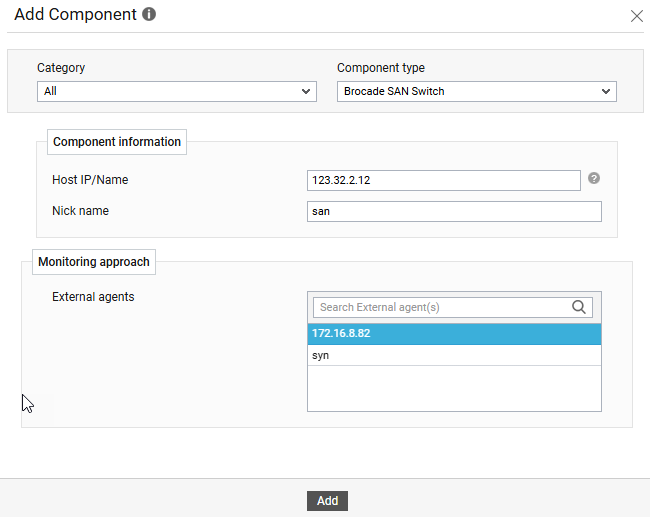
The Components page will then appear. In the Components page, select Brocade SAN Switch as the Component type and click the Add New Component button. This will invoke Figure 1.
-
Specify the Host IP/Name and the Nick name for the Brocade SAN Switch component.
-
Choose an external agent for the target switch by picking an option from the External agents list box.
-
Click the Add button to add the component to the eG Enterprise system.
-
After adding a Brocade SAN Switch component, you will be redirected to the Components page (see Figure 2). Using the options provided in the Components page, you can modify, unmanage or delete the newly added component. In addition, you can also configure the tests, set thresholds and maintenance policies, and change the IP address.

-
To collect the performance metrics, you may need to configure the tests that are mapped to the Brocade SAN Switch component. To configure the tests that need manual configuration, click on the
 icon in Figure 2.
 -
Figure 3 then appears where the list of unconfigured tests will be listed in the UNCONFIGURED TESTS list box.
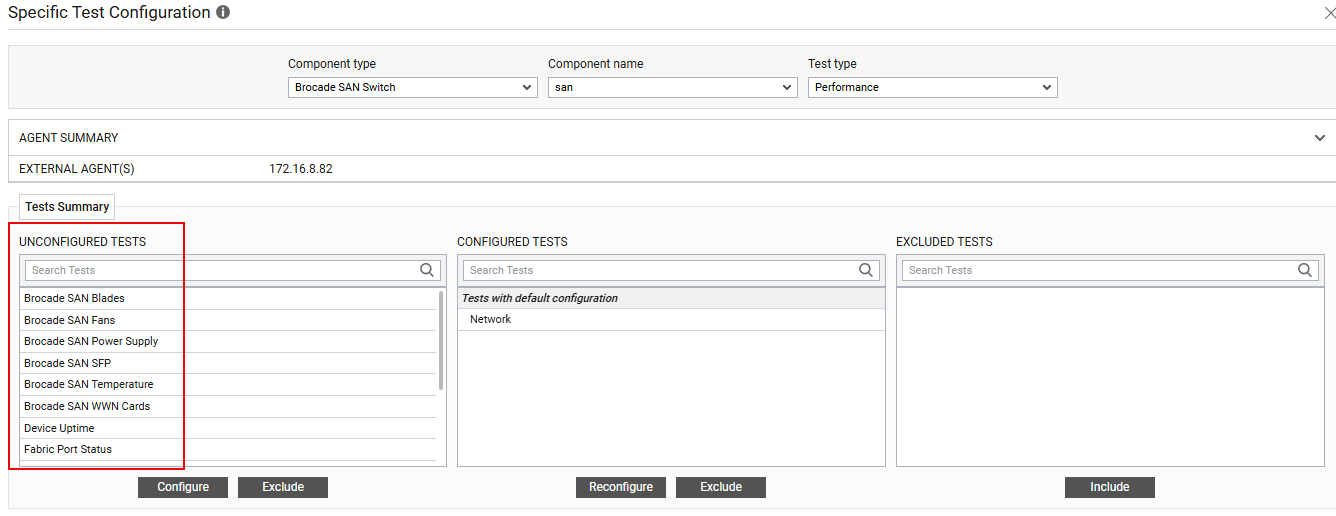
Figure 3 : List of unconfigured tests for Brocade SAN Switch
-
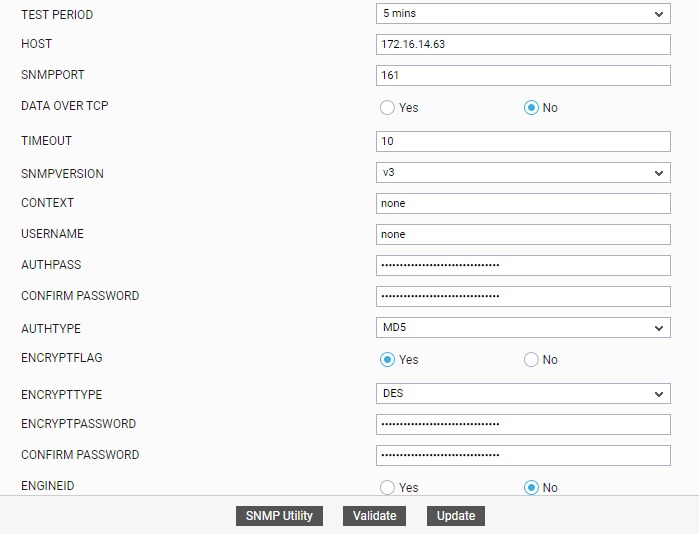
Click on any of the tests to configure it. For instance, if you click on the Fibre Port Status test which is SNMP based, Figure 4 will appear.
-
For instance, if you click on the Brocade SAN Fans test which is SSH based, Figure 5 will appear.

Figure 5 : Configuring the Brocade SAN Fans test
Once all the tests are configured, switch to the Monitor tab to view the performance metrics reported by the tests.