Cloud computing is a powerful enabler of growth and agility for small and medium businesses (SMBs). However, untagged cloud resources are one of the primary challenges most SMBs face in cloud environments. These untagged resources lead to a lack of visibility and accountability over cloud spending, which leads to wasted budgets and cost overruns.
The Challenge of Untagged Cloud Resources
Research shows that 57% of teams struggle to fully allocate cloud costs to the right project or customer, leading to 20–30% annual budget overruns [channelfutures.com]. This is most relevant to SMBs, who tend to have tight budgets and small IT teams to manage cloud spending.
Tags serve as metadata labels that are used on cloud assets (storage accounts, virtual machines, load balancers, etc.) allowing teams to properly classify and accurately charge costs to the right departments, projects, or customers. When resources are untagged:
- Cost allocation becomes guesswork, preventing accurate budgeting.
- There is no responsibility held by the teams and overspending can occur unintentionally.
- Finance and operations teams are not able to effectively justify or control cloud expenditure.
Why SMBs are Disproportionately Affected
For SMBs, where every dollar counts, untagged resources can quietly drain budgets. Unlike large firms with dedicated FinOps teams and advanced tooling, SMBs struggle to manage with manual or semi-auto processes, which make enforcing tagging policies difficult. Untagged resources end up being orphaned, forgotten, or shared across departments without clear ownership, becoming invisible cost centers.
Financial Impact of Untagged Cloud Resources
Untagged resources can take up a lot of cloud cost. Industry data suggests untagged costs in cloud environments can approach or exceed 20-40% of total cloud spending. This means that SMBs could be paying for resources nobody is tracking or maximizing.
Some typical cost impacts include:
- Paying for idle or underutilized compute instances.
- Unnecessary storage costs from orphaned storage accounts.
- Charges for services running in dev, test, or staging environments left on accidentally.
Addressing the Challenge of Untagged Cloud Resources
SMBs can adopt several best practices to reduce untagged resources and increase cloud cost allocation:
- Implement a strict tagging policy: Enforce tagging during resource creation using automation and cloud-native tools.
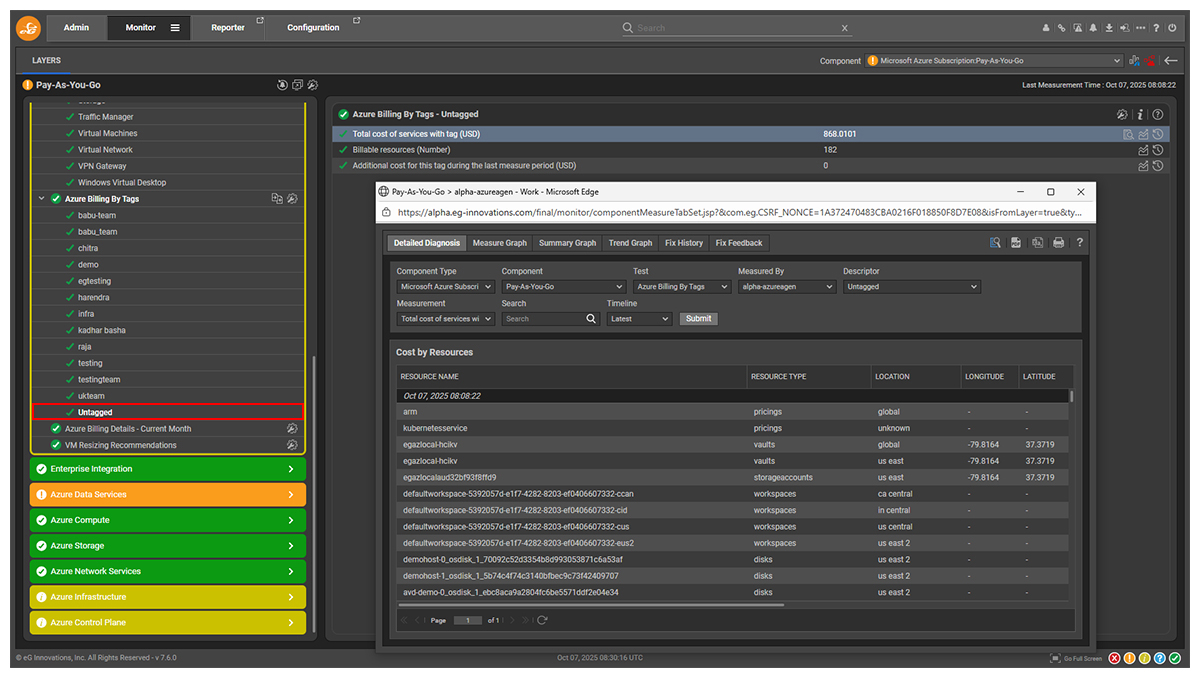
- Automate detection: Use tools like eG Enterprise to identify orphans or untagged resources on a regular basis.
- Train teams: Ensure all stakeholders understand the importance of tagging for cost accountability.
- Regular cost audits: Have regular review cycles for cloud expense and tag compliance.
Conclusion
For SMBs, cloud cost management is mission critical. Untagged cloud resources hinder visibility, inflate budgets, and erode profitability. By addressing tagging challenges proactively, SMBs can gain clearer cost insights, improved accountability, and get every cloud dollar to count.
eG Enterprise is an Observability solution for Modern IT. Monitor digital workspaces,
web applications, SaaS services, cloud and containers from a single pane of glass.