English
 Deutsch
 Espanol
 Français
 Portuguese
 中文
 한국어
 日本語


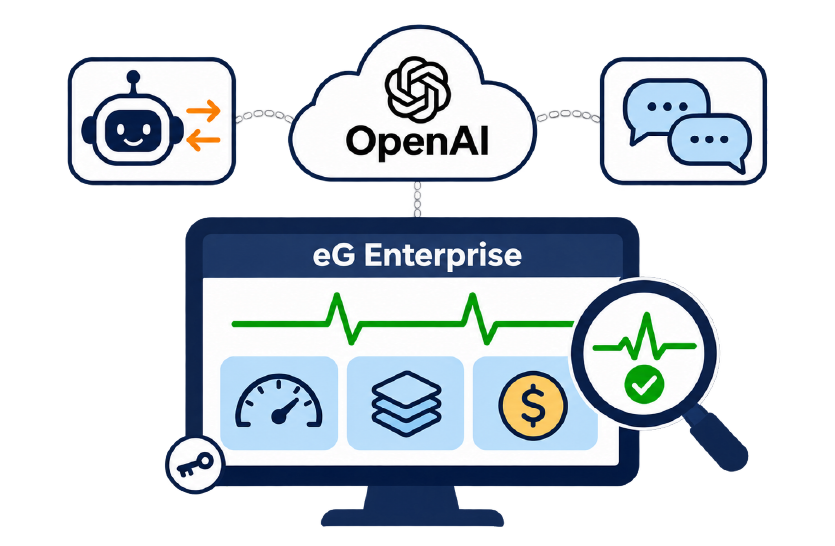
AI has moved beyond chatbots. Organizations are putting AI assistants, copilots and, increasingly, AI agents into production applications and business workflows. Every one of them runs on a large language model (LLM), and for many organizations that LLM comes from OpenAI. Agentic AI raises the stakes: an agent plans, calls the LLM, uses tools such as retrieval, embeddings and code execution, and calls the LLM again, so a single user request can turn into dozens of model calls.
That makes the LLM a new and critical tier of the application stack. When the model slows down, every step of every agent slows down with it. When an agent loops, retries or reasons at length, input and output tokens, and cost, can climb within minutes. Different models and AI capabilities generate very different usage patterns. And as more teams build AI applications and agents, each with their own projects and keys, administrators need to keep track of who is using which models.
This is the requirement behind Observability for AI: seeing AI the way it actually runs, from the LLM and its models to tokens, tool use and cost, alongside the applications and infrastructure around it. Because every AI application and agent depends on an LLM, Observability for AI starts with LLM monitoring.
eG Enterprise 7.6 kick-starts Observability for AI with LLM monitoring, beginning with OpenAI. It gives visibility into LLM health and responsiveness, model usage, input and output tokens, cost by project, the AI capabilities that applications and agents use, and the keys they authenticate with.
Why AI and LLM Monitoring Needs More Than an Availability Check
For traditional infrastructure, monitoring CPU utilization or whether a service is responding may tell you a significant part of the story. AI introduces new dimensions that infrastructure metrics cannot capture: models, tokens, tools and per-request cost. With agentic AI, there are also many model calls behind every user action.
An LLM can be available while users and agents experience slow responses. An agent can complete its task while its token consumption rises sharply. A particular model or project can account for disproportionate usage, while an accumulation of unused API keys creates an additional governance problem.
For teams running AI applications and agents, this means three sets of questions increasingly overlap:
Is the LLM healthy?
Is the model service available and responsive? Which AI capabilities are generating errors? Are failures or latency slowing down applications and agents?
Is AI usage efficient?
How many model calls are applications and agents making? Which models and capabilities are being used? How many input and output tokens are they consuming?
Is spend and access being controlled?
What are individual projects costing? Are costs changing significantly? Which Admin and Project keys are no longer being used?
This is what Observability for AI means in practice. eG Enterprise brings these dimensions together so teams can treat the LLM as an operational tier of the stack, rather than treating performance, consumption and cost as unrelated problems.
Monitor LLM Availability, Errors and Response Latency
The first requirement is straightforward:
Is the LLM responding fast enough for your applications and agents?
eG Enterprise runs synthetic checks against OpenAI to measure the availability, error rates and response time of the LLM and its AI capabilities, such as chat, embeddings and image generation, within each configured project. This helps identify which capability is unavailable, slow or returning errors.
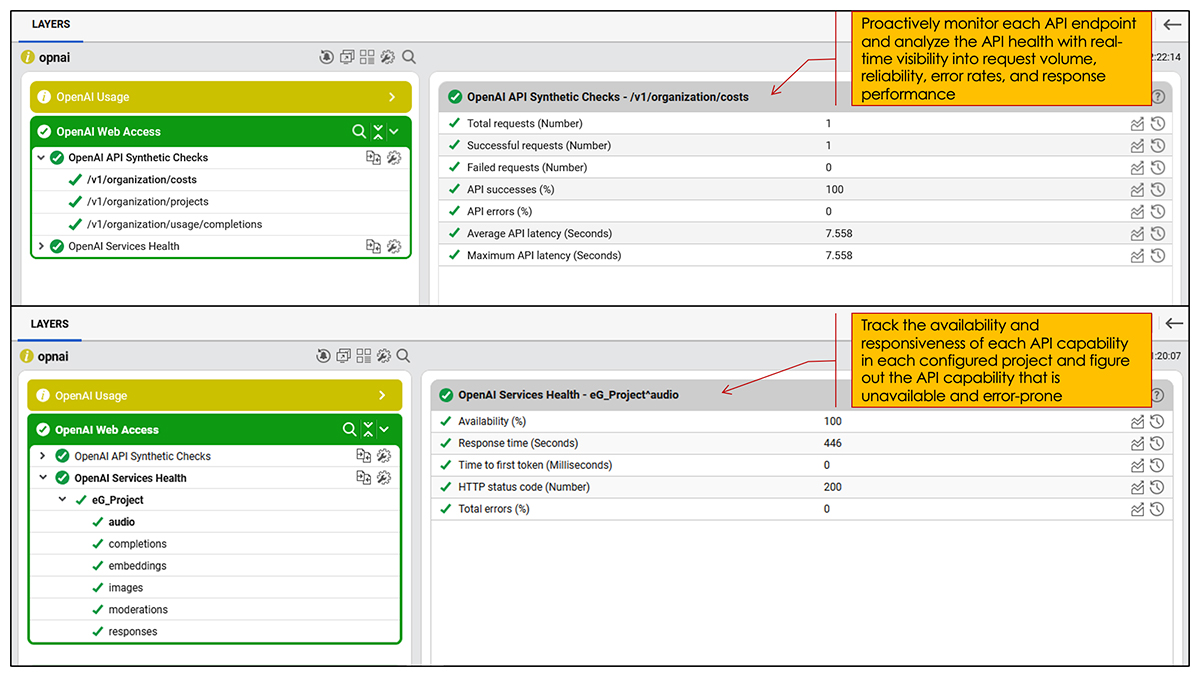
This matters because simply knowing that “the LLM is up” may not explain a slow AI application. An application owner, AI engineer or SRE needs to narrow the issue down and determine whether abnormal model latency or failures are associated with a particular AI capability. For agentic AI the effect compounds: an agent that makes ten model calls to finish a task feels the extra latency ten times over.
That visibility helps teams distinguish an LLM-side performance problem from issues elsewhere in the application or agent stack.
Track LLM Token Consumption by Model
Performance is only one part of Observability for AI. With LLMs, and especially with agents, consumption matters just as much.
eG Enterprise tracks the requests made to each OpenAI model, such as individual GPT models, together with their input and output tokens. This allows teams to identify which models are receiving the most requests and analyse their token consumption. This becomes particularly useful when investigating a change in AI usage or spend.
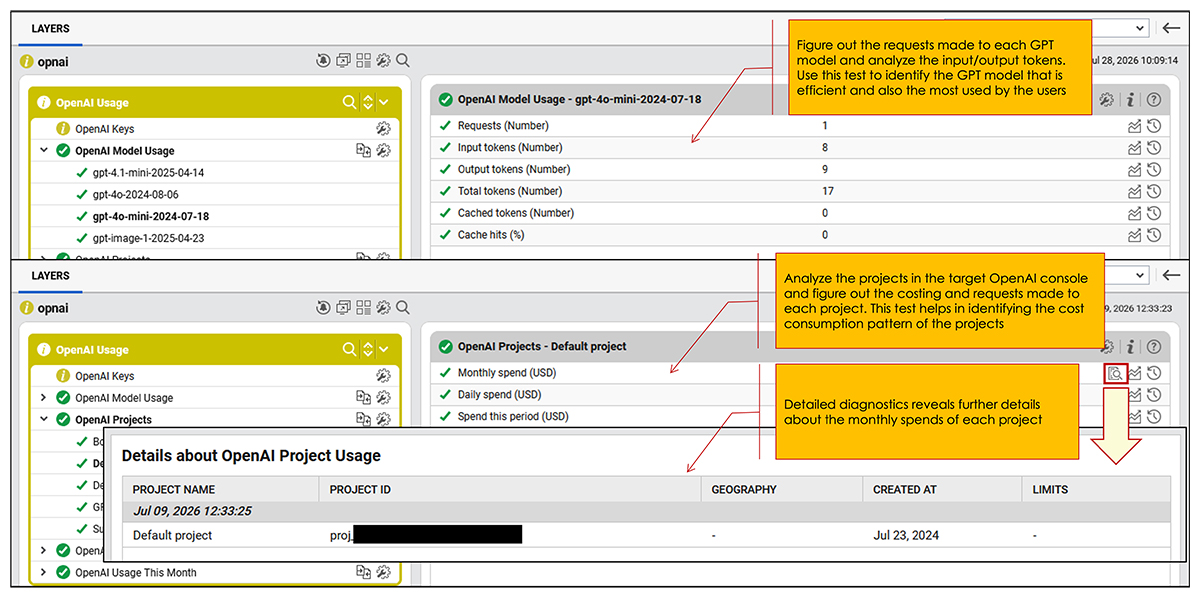
For example, an increase in costs becomes much easier to investigate when the operations or FinOps team can examine whether it coincides with an increase in model calls or token volumes, for example when a new agent goes live, or an existing agent starts looping, retrying or producing much longer outputs.
Rather than viewing AI cost solely as a monthly bill, teams gain the operational context needed to understand the activity behind consumption.
Attribute AI Usage and Cost to Projects, Applications and Agents
As AI adoption expands, a single organization may have many AI applications, agents and teams sharing the same LLM provider. Many organizations use a separate OpenAI project for each application, team or agent, which makes project-level visibility a practical way to attribute AI usage.
eG Enterprise analyses OpenAI projects and exposes the requests and costs associated with each project. Detailed diagnosis also provides information about monthly project spend.
This project-level visibility is especially useful for FinOps and platform teams because it helps move the conversation from:
“Why has our OpenAI bill increased?”
to:
“Which projects are generating the requests and costs we are seeing?”
Combining cost with request activity makes it easier to understand whether higher spend accompanies greater usage and where that usage is originating.
Monitor Daily and Monthly AI Cost Patterns
AI expenditure can be highly usage dependent, so knowing the total amount spent is only part of the picture.
The OpenAI monitoring in eG Enterprise is designed to help operators answer questions such as whether a project is showing an abnormal daily or monthly cost pattern. The platform’s detailed diagnostics also expose monthly spend information for individual projects.
Application owners can focus on the workload and user activity. SREs can investigate performance and traffic. FinOps teams can examine the corresponding consumption and cost patterns. All three are looking at different aspects of the same AI service.
Go Beyond Chat: Monitor the AI Capabilities Behind Agentic AI
AI usage extends far beyond chatbots. AI agents combine LLM reasoning with tools: they retrieve context from vector stores using embeddings, run code in code interpreter sessions, transcribe audio, generate speech and images, and moderate content. Each of these capabilities has different performance, usage and cost characteristics.
eG Enterprise provides capability-level monitoring covering areas including:
- Chat and responses
- Embeddings
- Image generation
- Audio transcription
- Text-to-speech
- Code interpreter sessions
- Moderation
- Vector stores
For example, eG Enterprise can track text-to-speech request volumes and characters converted to audio; transcription requests and audio duration; embedding requests and processed tokens; image requests and successful generations; moderation requests and submitted tokens; and chat requests and model token usage.
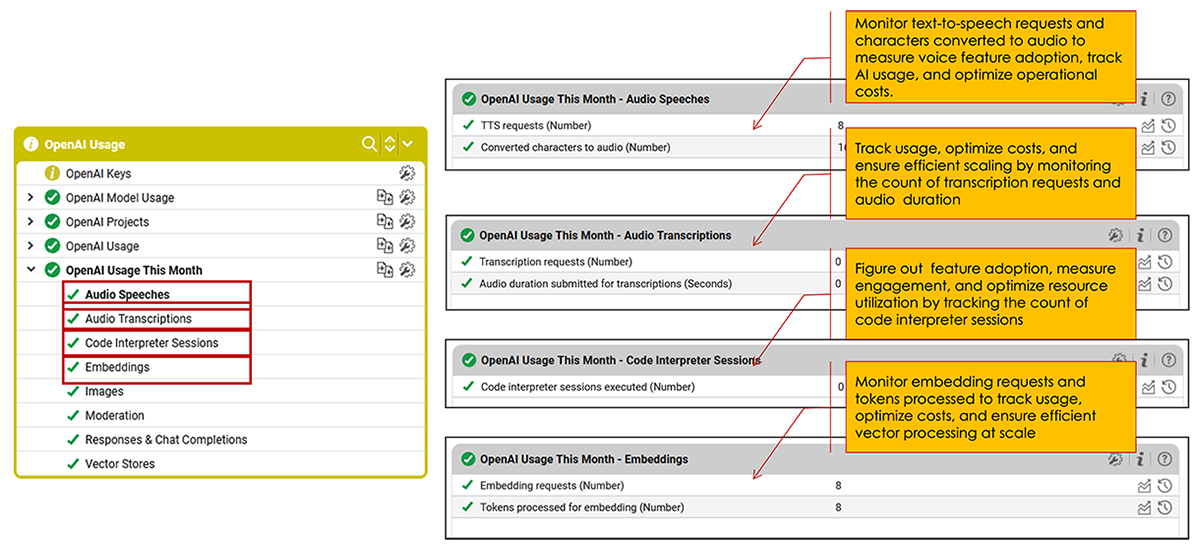
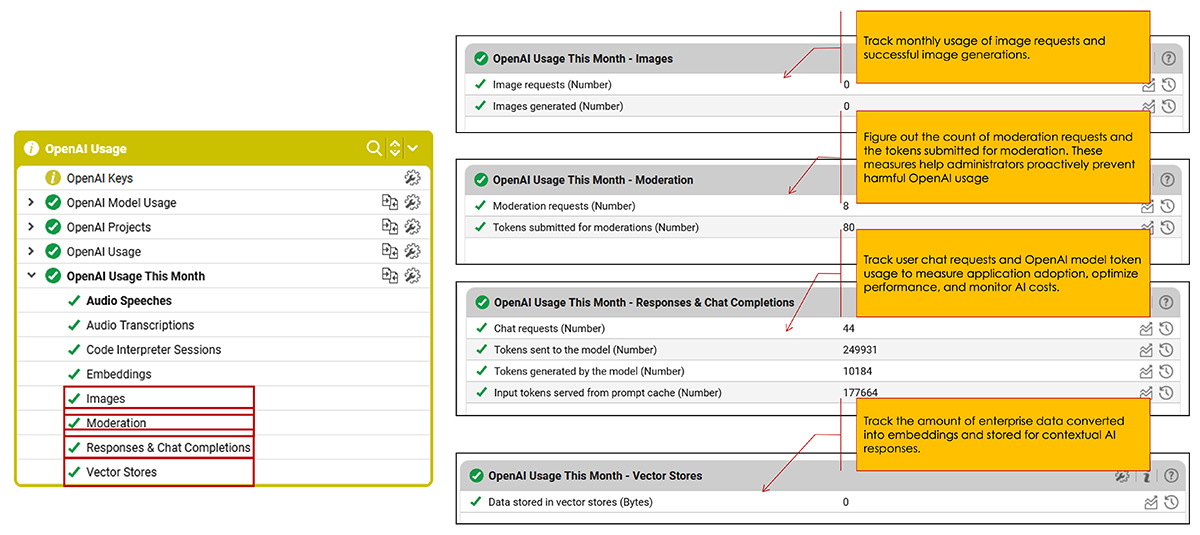
This capability-level view helps answer an important question that aggregate usage cannot:
What are your AI applications and agents actually using the LLM for?
The platform also exposes traffic, token consumption and cache efficiency by AI capability, providing another level of detail for understanding which capabilities are driving consumption.
Govern AI Access: Identify Inactive and Unused API Keys
Observability for AI also has a governance dimension.
Every AI application and agent needs credentials to call the LLM. As more teams build them, organizations can accumulate Admin and Project API keys that are no longer actively used.
eG Enterprise monitors the number of Admin keys and Project keys and identifies inactive keys. Detailed diagnosis provides additional information for inactive keys, including the user associated with the key and when that key was last used.
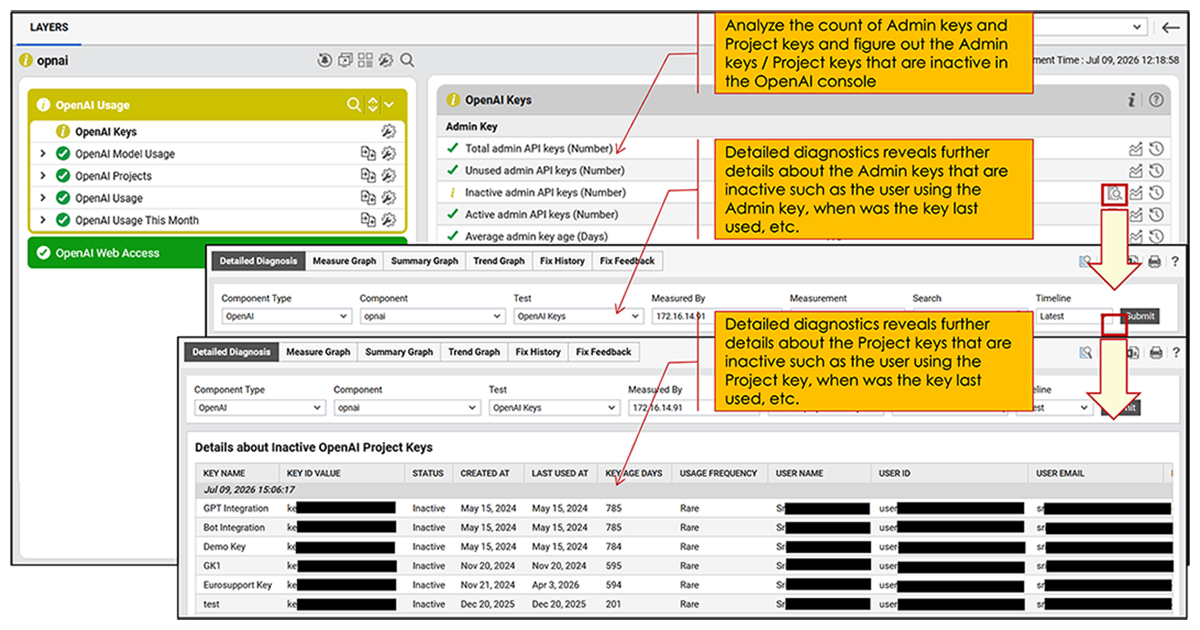
That gives administrators a practical way of identifying credentials that warrant review instead of allowing unused keys to disappear into a growing AI estate.
Bringing LLM Performance, Usage and Cost into the Same Picture
The real value of Observability for AI comes from looking at these metrics together.
Consider an AI agent whose LLM costs suddenly increase.
Knowing the cost has increased identifies the symptom, but not why. To investigate effectively, teams may also need to examine:
- Has request traffic increased?
- Which project, application or agent is generating the traffic?
- Which models are handling the requests?
- Has input or output token consumption changed?
- Is one AI capability, such as retrieval or code execution, driving the increase?
- Are users generating more chat, image, speech, transcription or embedding requests?
These are the types of relationships that become visible when service health, traffic, tokens, models, projects, capabilities and costs are monitored together. eG Enterprise provides metrics across all of these dimensions, rather than limiting AI monitoring to an availability check.
For SREs, AI engineers and application owners, that context can help explain a change in application or agent behavior. For platform teams it provides visibility into adoption and utilization. For FinOps teams it provides the usage context behind AI expenditure.
How eG Enterprise Monitors LLMs, Starting with OpenAI
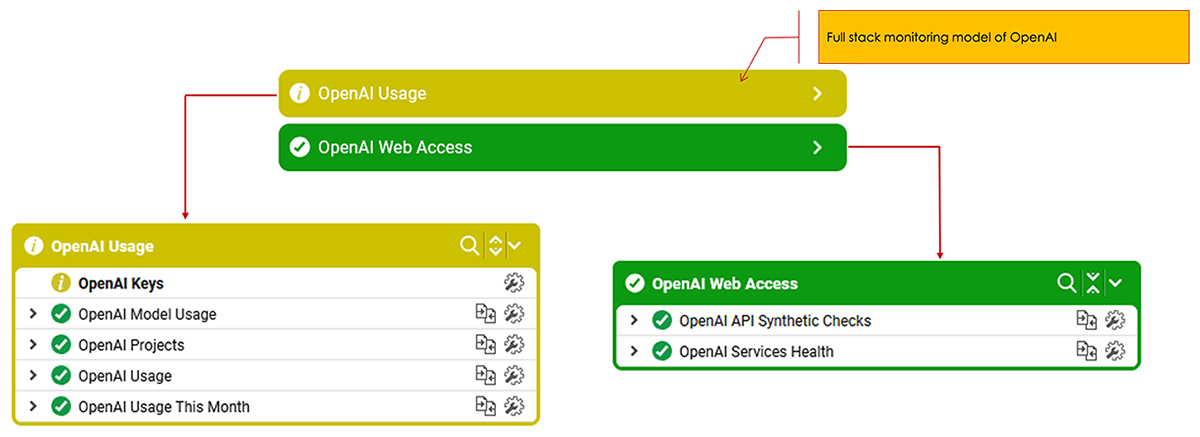
eG Enterprise monitors OpenAI agentlessly.
An eG remote agent running on a Windows or Linux host uses the OpenAI REST APIs for monitoring, with the Admin API and Project API keys specified in the OpenAI monitoring configuration. Nothing needs to be installed on the OpenAI side. One eG Enterprise Premium license is required for each monitored OpenAI target.
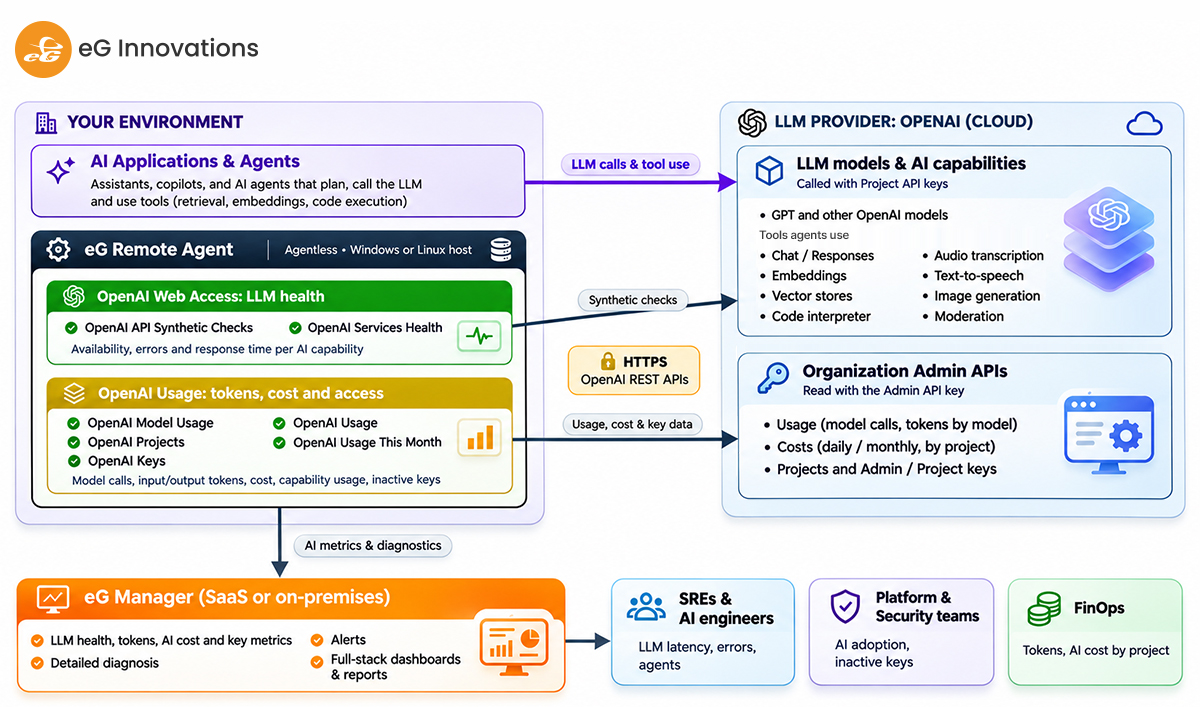
Because the LLM is monitored in the same eG Enterprise console as applications and IT infrastructure, Observability for AI becomes part of full-stack observability rather than a separate operational silo.
Observability for AI Starts with the LLM
Organizations are rapidly adding AI assistants and agents to their applications. Production AI raises many of the same operational questions as any other business-critical technology, alongside new ones that are specific to LLMs and agents.
Is the LLM available? Is it fast enough for agents that call it many times per task? Is it generating errors? Which applications and agents are using it? Which models and capabilities are driving consumption? How many tokens are being processed? And what is all of that costing?
Observability for AI answers these questions by treating performance and cost as one picture. It starts with the LLM, because that is what every AI application and agent depends on.
eG Enterprise 7.6 kick-starts Observability for AI with LLM monitoring for OpenAI, covering availability and response latency, model calls, tokens, models and AI capabilities, project costs and key usage.
The result is a clearer operational picture of the LLMs and AI agents that are becoming just as important to application performance as the infrastructure, databases, networks and cloud services around them.
Next Steps
Start your Observability for AI journey with the LLM that your AI applications and agents depend on. Explore LLM monitoring for OpenAI with eG Enterprise via a free trial for your own environment or a live demo with an engineer.
eG Enterprise is an Observability solution for Modern IT. Monitor digital workspaces,
web applications, SaaS services, cloud and containers from a single pane of glass.
Frequently Asked Questions
Observability for AI is the practice of monitoring AI applications and agents, and the LLMs they depend on, with the same rigor as the rest of the application stack. It covers availability, response latency and errors, alongside AI-specific signals such as model calls, input and output tokens, model and capability usage, cost and key governance. In eG Enterprise, Observability for AI starts with LLM monitoring, beginning with OpenAI.
AI agents call the LLM many times per task and use tools such as retrieval over vector stores, embeddings and code execution. Monitoring LLM latency, errors, token consumption and capability usage shows how agents are affecting performance and cost, for example when an agent starts making more model calls or consuming far more tokens than expected. eG Enterprise provides this LLM-level view for OpenAI.
LLM monitoring involves tracking whether the model service is available and responsive, alongside request volumes, errors and response latency. eG Enterprise monitors the health and performance of OpenAI so teams can identify slow responses or failures and determine whether problems are associated with a particular AI capability.
eG Enterprise monitors the input and output tokens consumed by OpenAI models. Tracking token usage alongside request volumes helps teams understand how heavily different models are being used, identify unusual increases in consumption and investigate the activity contributing to higher OpenAI costs.
LLM costs can be monitored by correlating AI spend with requests, projects, models and token consumption. eG Enterprise provides visibility into OpenAI costs at the project level, including monthly spend information, allowing FinOps and operations teams to identify which projects are generating costs and investigate increases alongside changes in usage.
eG Enterprise tracks requests and input and output tokens for individual GPT models, while also monitoring requests and costs associated with OpenAI projects. This allows teams to determine which models and projects are driving AI consumption and provides operational context when investigating changes in OpenAI expenditure.
Important LLM monitoring metrics include availability, response latency, errors, request volumes, input and output tokens, model usage, project usage and costs. It can also be valuable to monitor individual AI capabilities such as chat, embeddings, image generation, audio transcription, text-to-speech, moderation and vector stores. Monitoring these metrics together helps teams understand both the performance and consumption of OpenAI services.
eG Enterprise monitors OpenAI Admin and Project API keys and identifies inactive and unused keys. Detailed diagnostics provide additional information, including the user associated with an inactive key and when it was last used. This helps administrators identify credentials that may warrant review as their OpenAI environment grows.