


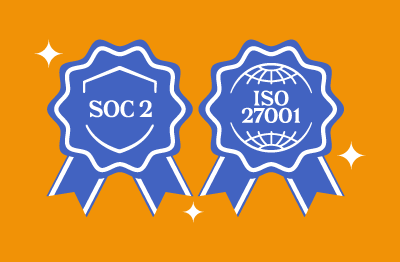
 Organizations are increasingly looking to build quality and security into their systems and services by design, often by the adoption of frameworks, standards and certifications such as SOC 2 Type 2 audits and ISO/IEC 27001. In a market where customers and partners are looking for quantifiable demonstrators that organizations and systems are built and operated with due diligence, achieving recognized certifications such as SOC 2 or ISO 27001 has become important for building customer trust, wining new business and regulatory compliance.
Underpinning these types of certifications is an essential component: IT Monitoring. This article overviews how IT monitoring acts as a foundational pillar in achieving and sustaining compliance with SOC 2 and ISO 27001 standards, illustrating real-world benefits, implementation strategies, and its growing significance in modern risk management.
What is IT Monitoring and Why It Matters
IT monitoring refers to the continuous surveillance of an organization’s networks, systems, infrastructure, applications, security, configuration, capacity, and services. It enables IT teams to identify problems, inefficiencies, or threats before they cause real damage. But in the realm of compliance, monitoring isn’t just about system health—it’s about collecting data and providing evidence of due diligence.
When you adopt an IT monitoring framework, you should aim to be able to observe user behavior, access logs, system uptime, data transfers, and internal policy enforcement. How good your IT monitoring tools are will manifest in whether you can also leverage the data collected during audits, to serve as objective proof that your organization is implementing and maintaining effective controls.
IT systems are becoming increasingly dynamic and ephemeral and automation meaning architectures often auto-scale. Modern methodologies such as containerization and microservices mean that systems change and scale frequently and rapidly. To achieve the type of coverage needed for auditing and compliance it has become essential to use IT monitoring tools that are designed for such environments and that can auto-deploy alongside the IT systems they are monitoring.
What is SOC 2?
SOC 2 (System and Organization Controls 2) is a widely recognized compliance framework that specifies how organizations should manage customer data to protect security, availability, processing integrity, confidentiality, and privacy.
It’s issued by the AICPA (American Institute of Certified Public Accountants) and is especially relevant for technology companies, SaaS providers, and cloud service vendors that handle sensitive customer information.
There are two main types of SOC 2 reports:
- SOC 2 Type I – Evaluates the design of controls at a specific point in time.
- SOC 2 Type II – Evaluates the effectiveness of those controls over a period of time (usually 3–12 months).
SOC 2 certification shows that an organization follows strict information security practices to safeguard customer data. The longer timeframes of evaluation mean that SOC 2 type II reports are favored within most sectors as a better demonstrator for assurance than one-off type I audits.
IT Monitoring and SOC 2 Compliance
The SOC Trust Services Criteria (TSC) are the core set of control criteria used in SOC 2 (and SOC 3) audits. The five Trust Services Criteria are:
- Security
- Protects systems against unauthorized access, both physical and logical.
- Includes controls for firewalls, intrusion detection, access management, authentication, and vulnerability management.
- Availability
- Ensures systems are operational and accessible as agreed upon in service commitments (SLAs).
- Includes performance monitoring, disaster recovery, failover, and incident handling.
- Processing Integrity
- Ensures system processing is complete, accurate, timely, and authorized.
- Covers data validation, error detection, and operational procedures.
- Confidentiality
- Protects information designated as confidential from unauthorized disclosure.
- Includes encryption, secure data disposal, and access controls.
- Privacy
- Addresses how personal information is collected, used, retained, disclosed, and disposed of, according to privacy policies and regulations.
- Includes consent management, user rights, and secure handling of personal data.
A comprehensive monitoring setup ensures that alerts are generated for unauthorized access, abnormal usage patterns, and failed login attempts. The ability to correlate logs with network activity or application anomalies helps identify root causes and minimize downtime—critical for the availability and integrity aspects of SOC 2. Moreover, these logs provide historical insight, proving consistency in the implementation of your controls over time—a major requirement in SOC 2 audits.
Example: Many organizations use VDI to support hybrid workstyles. Desktops deployed on the cloud are also common. Who logged in, for how long, what applications they access, etc. are important records needed to demonstrate compliance.
What is ISO 27001?
ISO/IEC 27001 is the international standard for information security management systems (ISMS). It’s published by the International Organization for Standardization (ISO) and the International Electrotechnical Commission (IEC).
Certification to the ISO 27001 standard is recognized worldwide and helps organizations prove that their information security management is aligned with best practice.
The ISO 27001 standard is broken down into two major components:
- Mandatory clauses: The first part of the ISO 27001 standard lists 11 clauses (0–10), with only 4–10 being the clauses a company must implement to be ISO 27001 compliant.
- Annex A controls: The latest ISO 27001 version has 93 (reduced from 114 in the previous version) security controls a company selects from to create its security risk assessment. (Note that organizations only need to adopt controls that apply to their specific operations.). Controls essentially function as checklists of steps to be implemented.
IT Monitoring and ISO 27001 Compliance
ISO 27001 is more than technical checklists. It is a comprehensive standard for establishing, maintaining, and continually improving an Information Security Management System (ISMS). Key to this approach is risk-based thinking, and IT monitoring becomes an integral part of this framework.
For ISO 27001, organizations must identify and assess information security risks and implement appropriate controls. IT monitoring enables this by giving visibility into:
- Who accessed what systems, when, and how
- System performance patterns that may indicate compromise
- Logs of failed authentication or abnormal transfers
IT monitoring also supports specific ISO 27001 controls, such as A.12.4 (logging and monitoring), A.16.1 (incident management), and A.13.1 (network security). Without monitoring, risk assessments are blind guesses. With it, they’re data-driven insights. Note: the “A.” prefix refers to specific “Annex A” controls.
Challenges in Cloud Environments
Monitoring in the cloud is often very different from traditional on-premises systems. Cloud-native services are often ephemeral, meaning that virtual machines or containers can spin up and down within minutes, and data may be distributed across regions. This makes consistent monitoring a complex task.
Moreover, organizations use multi-cloud or hybrid-cloud strategies, where workloads and services are scattered across AWS, Azure, GCP, and private clouds. Without unified monitoring tools, maintaining a coherent compliance posture becomes difficult.
There is also the shared responsibility model to consider. In cloud environments, the cloud provider secures the infrastructure, but the organization is responsible for data and configuration security. Monitoring helps bridge this gap by ensuring misconfigurations (such as open storage buckets or overly permissive IAM roles) are identified quickly.
Examples where IT monitoring aids certification in cloud include:
- If using Microsoft 365 (was Office 365), you need to know if MFA is configured, if there are login failures, are there orphaned accounts. Monitoring your cloud service provider’s performance is also usually part of compliance.
- Integrating endpoint management with Intune and acting on compliance issues is important.
SLA Compliance and Business Assurance
Monitoring and compliance aren’t just about security. Standards such as ISO 27001 and SOC2 also support business commitments such as service-level agreements (SLAs). For example, if your SOC 2 report guarantees 99.9% uptime, you must prove it and provide evidence of adherence.
By continuously tracking availability, response times, and error rates, IT monitoring offers evidence that your services meet contractual obligations. It also provides a safety net, helping operations teams identify and resolve issues before customers even notice them. Many modern monitoring tools incorporate features to automatically define and track quantifiable SLAs and business KPIs. Monitoring tools which couple such capabilities with automated reporting can streamline compliance processes and eliminate manual effort from compliance processes.
Detecting and Recording Adherence to Best Practices
Beyond compliance, monitoring reveals whether best practices are being followed:
- Are patches applied within policy timeframes?
- Are encryption protocols up to date?
- Are backups performed and validated?
- Are endpoints running antivirus and firewall protections?
- Are OSs patched to the latest version?
These types of checks can be incorporated into your certification’s control matrix, and auditors look favorably on mature monitoring practices that show a culture of accountability.
Types of IT Monitoring and Their Role in Compliance
IT monitoring is not monolithic. Different types of monitoring serve different compliance goals:
- Infrastructure Monitoring ensures that servers, storage, and networking equipment are operational, patched, and performing as expected. This supports availability and capacity planning, for example: for SLA adherence.
- Application Performance Monitoring (APM) helps detect issues in code execution, user experience, and third-party integrations. These insights contribute to processing integrity. In particular, effectively identifying problems in third-party applications where you do not have access to the code is greatly streamlined with good APM tools.
- Security Monitoring focuses on identifying suspicious activities such as privilege escalations, unapproved data flows, or brute-force attacks. This is essential for maintaining security and confidentiality. Monitoring the logs of authentication technologies such as Entra ID is essential, learn more: Entra ID Monitoring – Sign In Logs & Attack Detection.
- Network Monitoring tracks bandwidth usage, packet loss, and latency. It helps identify intrusion attempts and supports ISO 27001’s network control requirements.
- Log Monitoring aggregates and analyzes logs from various systems. Data from logs is often required by SOC 2 and ISO 27001 audits to demonstrate that control activities are enforced.
How to Choose Monitoring Suitable for SOC 2 Type II Audits and ISO 27001 Compliance
With forethought you can select monitoring tools and technologies that automate the process of gathering the right data needed for SOC 2 audits and that are architected in a secure manner to satisfy SOC 2 criteria themselves. Similar requirements apply to the qualities that ISO 27001 demands from IT monitoring tools.
Key features you should look for, include:
- Auto-discover and Auto-deployment Technologies: To overcome the challenges of ephemeral and auto-scaling technologies, it is now essential to implement IT monitoring tools that auto-discover and auto-deploy to ensure that continuous monitoring demanded from compliance frameworks. Look for tools that offer universal operators and that are designed to integrate with IaC (Infrastructure as Code) workflows.
- Granular RBAC (Role-Based Access Control): Monitoring is an invasive and privileged functionality. The data revealed from monitoring needs to be secured to protect your systems. Choose monitoring tools with granular RBAC that allow you to limit visibility on a strictly need to know basis. Formal RBAC can be used as a demonstrator, for compliance certifications, that data and systems are under formal and managed controls.
- Change Configuration Tracking: Many modern monitoring tools include change and configuration tracking features that automatically record and audit the state of systems. Beyond compliance these features are essential for root cause diagnosis of issues. Learn more: Configuration Management & Change Tracking for Observability.
- Built in Auditing: Monitoring tools that automatically generate audit reports simplify participation in formal framework certifications. Beyond this to demonstrate proper control monitoring tools that enable the execution of scripts or remote control actions on systems must log and record their actions in an auditable format or both security and compliance certification, learn more: Control and Audit Remote Control Actions for Security.
- Data Retention Control: Many cloud-native tools and SaaS products retain data by default for far shorter timescales than are required for SOC 2 Type II purposes. Archiving beyond default retention periods is often costly in cloud. Monitoring tools need to provide cost-effective data retention on sufficiently long timescales to align with certification demands.
- Appropriate Data Localization and Sovereignty Controls: The control over data that organizations need to demonstrate can be influenced by industry and governmental regulations. Organizations must choose SaaS monitoring tools that store, process and backup data in appropriate locations. For many organizations an on-premises or self-hosted monitoring platform can be the most appropriate choice for their governance needs. Choose a monitoring platform with deployment and backup options that aligns with your data control needs.
- Automated and Query-free Reporting: Choosing a monitoring product with built in historical reporting will simplify your certifications. Look for features that allow reports to be generated without query languages and automate report scheduling and archiving.
Conclusions on IT Monitoring for SOC 2 and ISO27001 Certifications
IT monitoring is not just a technical operation, it can be a strategic enabler of governance, compliance, and trust. Whether preparing for a SOC 2 audit or establishing an ISO 27001 ISMS, monitoring provides the transparency, control, and confidence that modern organizations need. Importantly, a wise choice of monitoring tools can automate the collection of data for audits that provides evidence of controls being in place and effective.
Beyond SOC 2 and ISO 27001 certifications, similar methodologies apply for organizations looking to adopt and align with regulatory legislation and frameworks associated with DORA and NIS 2. Learn more:
- What is NIS2 Compliance? And How to Use Proactive Monitoring to Automate Compliance | eG Innovations
- What is the Digital Operational Resilience Act (DORA)? Everything you need to know about DORA compliance | eG Innovations
As regulatory pressures mount and cyber threats evolve, monitoring will play an even greater role in the security ecosystem. Organizations that invest in intelligent, unified monitoring systems are not just compliant but are also resilient, responsive, and ready for what comes next.
eG Enterprise is an Observability solution for Modern IT. Monitor digital workspaces,
web applications, SaaS services, cloud and containers from a single pane of glass.