Monitoring AKS Worker
As mentioned earlier, eG Enterprise provides a specialized model for monitoring AKS Worker (see Figure 1).
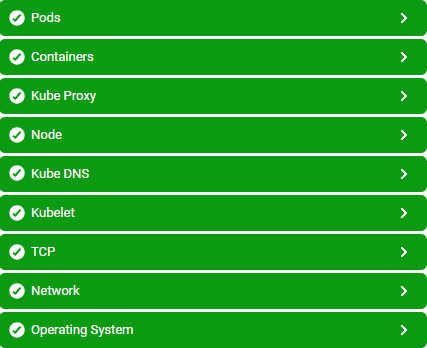
Figure 1 : Layer model of AKS Worker
Using the metrics reported, administrators can quickly find accurate answers for the following performance questions:
-
Is the current utilization of CPU, memory, and disk optimal on each node?
-
Are there any performance bottlenecks in the infrastructure?
-
Is the health of each worker satisfactory?
-
Is the process of pod creation, deletion, and management working efficiently?
-
Is the workload distributed optimally across pods and containers?
-
Does the current setup allow for both horizontal and vertical scaling?
-
Is the application performance up to the mark? Are there any performance issues identified?
-
Is network traffic being handled effectively across the nodes?
-
Is logging effective and able to capture all events?
-
Is there enough capacity for the expected usage of the application?
-
Are all pods and containers set up effectively for the application's requirements?
-
Are the current reported metrics supporting application monitoring?
-
Are nodes in a state that supports backups and recovery processes?
-
Are there any unusual operational patterns that need attention?
-
Is the user experience for management up to the mark?
-
Is historical data available for performance trend analysis?
-
Are the correct and compatible versions of tooling used across the environment?
-
Are there any third-party integrations, and are they working as expected?
-
Are the nodes, containers, and pods restarted in a timely manner? Is uptime being monitored?
-
Are the proxies and related rules working efficiently?
-
Is the application able to meet its service level agreements?
By effectively monitoring AKS worker nodes, organizations can enhance performance, security, and overall reliability of their applications.