
The promise, and the problem
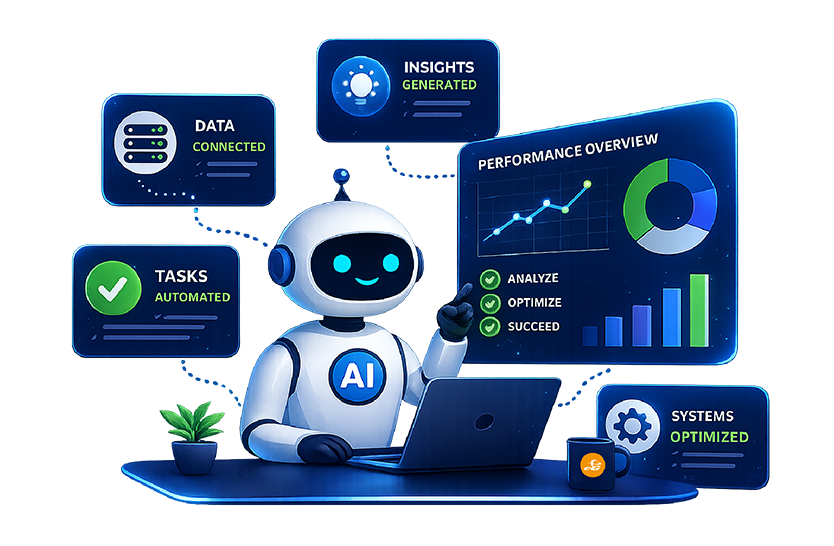
Every monitoring vendor on the market now has an AI story. AIOps has moved from category buzzword to standard line-item in IT operations strategy, and the reasoning is sound: as infrastructure spreads across cloud, hybrid, microservices, and virtualized platforms, the volume and velocity of operational data has outrun what human teams can process. AI-powered monitoring is the obvious answer.
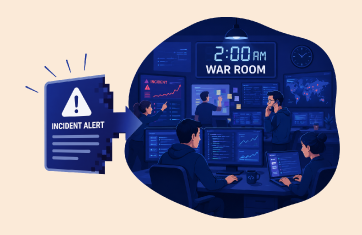
And yet, talk to most CIOs running AI-enabled monitoring in production and you will hear the same set of complaints. Too many alerts that don’t mean anything. Anomaly detection that flags routine variations and misses the issues that actually broke production. Root-cause analysis that points to symptoms, not causes. Confidence in the tool eroding over time.
The problem is not the AI. The problem is what the AI knows about your environment.
The premise that separates strong implementations from weak ones
Most AIOps platforms apply machine learning to whatever telemetry they can collect — logs, metrics, traces, events — and look for patterns. The premise is that with enough data, AI combined with statistical methods will eventually surface meaningful signals.
The strongest deployments start from the opposite premise. They begin with deep, domain-specific knowledge of how each technology in the stack actually works, which of its metrics matter, and how it depends on other components. AI is then layered on top of that knowledge to do what AI does well: process scale, spot patterns, learn baselines, and reduce noise.
This distinction sounds technical, but it has direct business consequences. Generic AI applied to raw telemetry produces noisy, ambiguous output. Domain-aware AI produces operational decisions. The difference shows up in your incident metrics, your team’s confidence in alerts, and your monitoring platform’s measurable contribution to availability outcomes.
What this means for the business
When AI-powered monitoring is built on domain expertise, four outcomes become measurable rather than aspirational.
Reduced downtime and faster recovery. Domain-aware anomaly detection catches the conditions that precede outages, not just the failure itself. Mean time to resolution improves because the platform identifies the actual root cause rather than every symptom in the dependency chain. For a business where every hour of downtime carries a quantifiable revenue or productivity cost, this is the single largest line in the AIOps business case.
Lower operational cost per service. As estates grow, traditional monitoring requires roughly linear growth in operations headcount. Domain-aware AI breaks that relationship. Alert noise drops sharply when the platform understands which deviations matter for a given technology. Manual correlation work — the activity that consumes most of a typical IT operations team’s day — collapses to a fraction. Existing teams cover larger estates without additional hires.
Operational resilience and audit readiness. Regulators are moving quickly on this. The EU Digital Operational Resilience Act (DORA), effective from January 2025, requires financial entities to demonstrate ICT risk management capabilities including anomaly detection and incident response. NIS2 extends similar requirements across critical infrastructure sectors. Demonstrable, AI-driven anomaly detection and documented incident response are becoming compliance obligations, not optional capabilities. For regulated industries, the AIOps decision is increasingly a risk-management decision with board-level visibility.
Confident capacity decisions. Domain-aware trend analysis identifies where infrastructure is genuinely under pressure versus where headroom is being wasted. Right-sizing decisions stop being annual guesswork and become continuous, data-backed adjustments. In hybrid and cloud environments where over-provisioning translates directly into invoice line items, this affects budget every month.
Across eG Enterprise customer deployments…
- 72% of users reported that eG Enterprise helped reduce the time to identify the root cause of application performance issues.
- 84% of customers reported avoiding application outages because eG Enterprise identified issues before end users were affected.
Where domain expertise comes from
The natural question for any IT leader evaluating AIOps platforms is how a vendor builds domain expertise at scale. Domain knowledge for one technology is achievable. Domain knowledge across the 650+ technologies covered by eG Enterprise is a different problem entirely.
At eG Innovations, this has been the central engineering focus from the start. Three capabilities are worth understanding at the evaluation stage.
Layer models
For each of 650+ supported technologies, eG Enterprise ships with a human-curated model that defines which metrics matter, how the components within that technology interact, and how that technology depends on others in the stack. These models are built by engineers with deep operational experience in each domain and updated as technologies evolve. The AIOps engine uses these models as the context against which all analysis is performed.

Topology-driven root cause
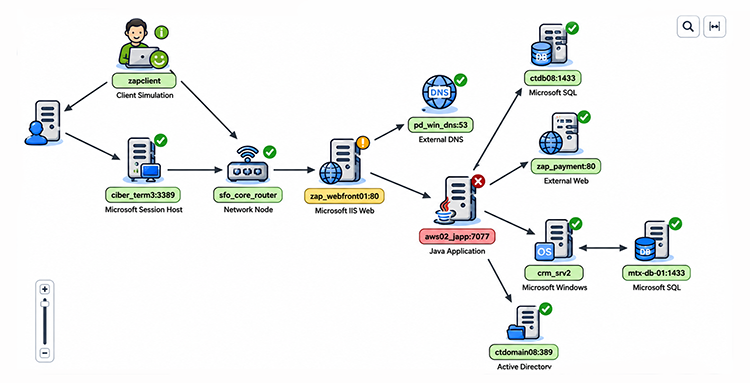
Because the platform understands dependencies — not just statistical correlations — it can distinguish primary causes from downstream effects. When a Java application slows down and the IIS web server in front of it reports degraded user experience, the operator is taken straight to the Java tier, not the symptom in the web layer. This is the difference between root-cause diagnostics that close incidents and correlation-based alerts that start them.
Adaptive baselining
eG Enterprise’s auto-baselining learns normal behaviour for each technology and each time period: hour of day, day of week, month, season. A spike in user logins at 9am Monday is not the same signal as the identical spike at 3am Sunday. Domain context is what allows the platform to tell the difference, and to flag the second case without flooding the team during the first.
The combined effect is that operations teams stop arguing with their monitoring platform and start acting on it. That shift — from a tool the team works around to a tool the team works with — is what separates AIOps that delivers business outcomes from AIOps that delivers impressive demos.
The question worth taking into your next evaluation of AI-powered monitoring
The AIOps category will continue to grow, and most platforms will continue to call themselves AI-powered monitoring. The meaningful question for buyers is no longer whether to adopt AI in monitoring. It is which approach to AI delivers operational outcomes rather than dashboard theatre.
“AI is the engine, not the strategy”
The platforms that hold up under production conditions share one trait: they treat AI as the engine, not the strategy. The strategy is the domain expertise that tells the engine what to learn, what matters, and what to ignore. Without that, AI in monitoring is statistical analysis hoping to find meaning. With it, AI becomes operational decision support that IT leaders can build availability commitments around.
That is the question worth taking into your next AIOps evaluation.
Next steps
Early in evaluation? Start with our eBook AIOps Solutions and Strategies for IT Management. It covers the architectural choices that separate strong AIOps implementations from weak ones, and gives you a framework for assessing any platform on the market.
Comparing platforms? Book a 30-minute technical walkthrough of eG Enterprise. We will demonstrate layer models, topology-driven root-cause analysis, and adaptive baselining against scenarios drawn from your own environment, not generic demo data.
Building the business case? Request a personalised ROI assessment. Our team will work with yours to quantify likely downtime reduction, operations cost savings, and compliance impact based on your estate size, industry, and regulatory profile.
eG Enterprise is an Observability solution for Modern IT. Monitor digital workspaces,
web applications, SaaS services, cloud and containers from a single pane of glass.