


SAP Cloud Migration Challenges and eG Innovations’ Solution
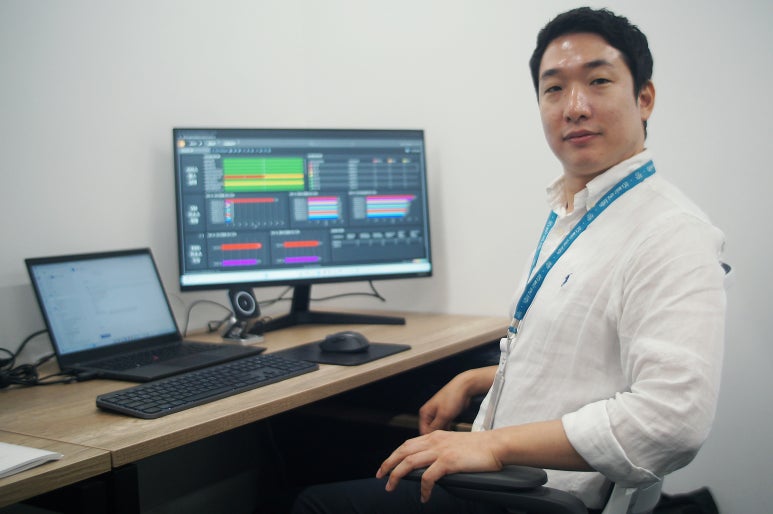
Inseop Lee, Presales Manager, chose this major enterprise’s case as the main topic for this interview. Specifically, it’s a project named ‘NERP (Next Generation ERP)’ that began in the summer of 2024. This customer faced several significant operational challenges while migrating from on-premises SAP to SAP S/4HANA Private Cloud Edition (SAP PCE).
The biggest issue was the inability to monitor infrastructure performance. In the SAP PCE environment, SAP takes responsibility for infrastructure operations. While this reduces the operational burden for customer enterprises, ERP sits at the core of today’s business operations—it is truly a mission-critical system. Minimizing incidents is essential, and when they do occur, business continuity must be restored quickly. This requires real-time visibility into resource utilization and the ability to rapidly analyze root causes when incidents occur.
In the on-premises environment, customer enterprises could directly monitor application server performance and conduct incident analysis. However, the situation changed after cloud migration. Key metrics became difficult to access, and when incidents occurred, the process required opening tickets and waiting days for results. While SAP’s CALM (Cloud Application Lifecycle Management) service is useful, its cost burden was significant—even for this major enterprise.
“To address these customer concerns, we propose implementing the eG Enterprise solution,” said Inseop Lee, explaining that eG Innovations built an alert notification system enabling the customer to detect and analyze incidents independently. Notably, for the SAP PCE environment where infrastructure monitoring was previously impossible, they urgently developed and delivered functionality to retrieve resource information through Remote Function Calls.
However, the process wasn’t entirely smooth. Initial PoC results showed that eG Enterprise could natively support only about 70% of the 50 KPIs defined by the enterprise. There were also challenges with some UI customizations—for example, implementing hourly maximum value graphs in 3-month performance trend lines wasn’t possible.
To implement the remaining 30%, Inseop Lee reached out to the R&D headquarters team. He requested features including service-oriented monitoring (integrated view across all servers), additional infrastructure performance metrics, batch job performance analysis and incident detection, and Remote Function Call-based infrastructure monitoring. These were areas not on the existing product roadmap.
The headquarters R&D team initially showed reluctance, citing that “such work belongs in the domain of SI companies, not solution vendors.” However, Inseop Lee persisted in his persuasion efforts. He believed the reference from this enterprise customer held significant value for the Korean market, and the requirements were reasonable. Bumsik Jung, Sales Director of the Korea office, also supported Inseop Lee by proposing ways to work around budget constraints.
As a result, 8 out of 13 custom requirements were implemented, raising the support rate to over 85%. Long-term trend analysis—something not provided by SAP tools—also became possible. The customer now enjoys business value with a 5-year TCO that is 4 to 5 times lower compared to using SAP PCE’s CALM service. The structural advantages of eG Innovations’ perpetual license model also contributed to this benefit.
In particular, the development work spanning two months was incorporated into eG Enterprise version 7.5, released this year. This means other customers can now benefit as well. It’s a case that demonstrates eG Innovations’ philosophy of actively reflecting customer feedback in their products.
 |
“This isn’t simply a success story from one project. I see it as a symbolic case demonstrating how eG Innovations addresses the common concerns enterprises face during cloud ERP migration. This is particularly worth considering for mid-sized and smaller companies with limited IT staff.” — Inseop Lee, Presales Manager.
|
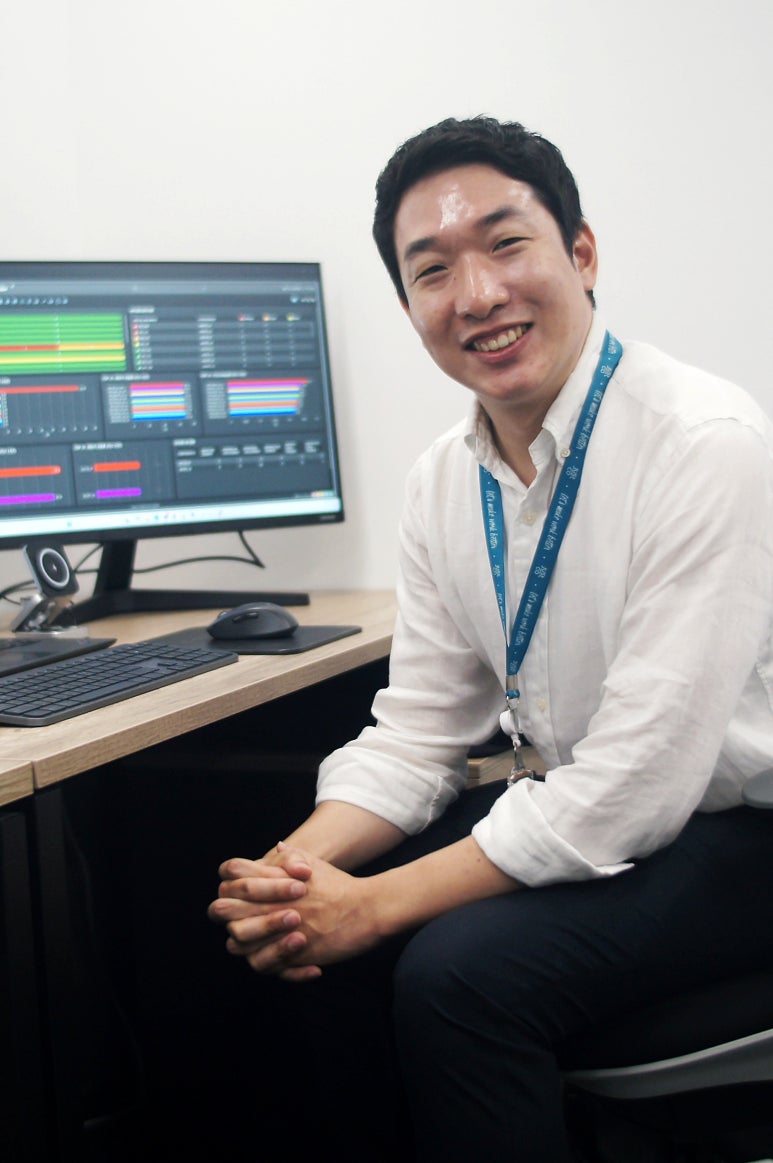
His prospects for cloud-era observability
Inseop Lee began his career as a technical support engineer at a security company before joining eG Innovations after working at a global big data solution vendor. He highlighted organic teamwork and broad scope of responsibility as distinctive characteristics of eG Innovations. Unlike his previous companies, where goals were handed down in a top-down manner, eG Innovations fosters active communication and collaboration both within the local office and across global teams, naturally leading to a wider range of responsibilities. “Beyond my initial security domain, I’ve had the opportunity to expand my expertise by working with various technologies including virtualization, cloud, containers, and AI,” he said.
Building on these opportunities, Inseop Lee aspires to become a specialist in the observability field. He hopes to eventually grow into an industry guru who can set directions for the field and share his expertise. In the mid-term, he expressed his desire to have opportunities to share insights at large-scale technology conferences.
When asked about his outlook on the future of observability, Inseop Lee identified two key directions. “Incident detection is now a basic capability for all solutions. What will matter is who can analyze root causes faster and more accurately, and provide actionable recommendations,” he explained. “On the other hand, convenience factors such as AI integration and user-friendly interfaces will become increasingly important.”
In other words, alongside vertical advancement in detection technology, user interface will gain importance horizontally to address increasingly complex IT environments. “The inevitable trend of ERP migration to the cloud is directly connected to this. You can leverage the advantages of cloud while managing the downsides of complexity and operational risk. Comprehensive and agile observability is the solution,” he said.
eG Enterprise is an Observability solution for Modern IT. Monitor digital workspaces,
web applications, SaaS services, cloud and containers from a single pane of glass.
|
“eG Innovations may not yet be widely known in Korea, but it has the potential to emerge as a hidden gem in the era of cloud migration. If you’ve read this far, look into it right away.” — Inseop Lee, Presales Manager.
|
eG Enterprise is an Observability solution for Modern IT. Monitor digital workspaces,
web applications, SaaS services, cloud and containers from a single pane of glass.