One of the hot topics from our recent Citrix-focused webinar was the Citrix License Activation Service (LAS). I had the chance to present alongside George Spiers— Citrix Expert and EUC Architect —and we walked through what LAS is, how it works, and what teams should be aware of.
The webinar title was “Citrix in 2026: Navigating the New End User Computing Landscape” and covered key updates and information on Citrix EUC products, such as:
- What’s New with Citrix in 2026
- The Latest from Citrix Profile Management
- Architectural Decision Patterns
- Citrix Performance Tuning Tips from the Field
- Getting ready for Citrix License Activation Service (LAS)
If you missed the webinar itself, you can catch-up and watch it online: Citrix in 2026: Navigating the New End User Computing Landscape.
Citrix LAS generated a lot of discussion during the Q&A, so I’m going to break down the key points we covered and share some resources for further reading. With file-based licensing reaching end-of-life on April 15, 2026, organizations should be actively transitioning to LAS if they haven’t already.
What is the Citrix License Activation Service (LAS)?
Citrix outlined this new solution on their website and you can find that information, here: License Activation Service | Citrix Virtual Apps and Desktops™ 7 2511.
The License Activation Service (LAS) is a new cloud-based licensing solution that provides an alternative to the traditional Citrix legacy licensing. LAS introduces new modules for activation, ensuring a seamless and modern approach to license management.
LAS simplifies the Citrix Licensing experience. There are no longer license access codes or files to generate, download, or install on the License Server. You only need to upgrade your License Server and register with Citrix Cloud. Once the compatible products are pointing to the License Server, they can be activated automatically.
After activation, the License Server regularly communicates with the License Activation Service to keep its activation up to date. The LAS is built with cloud technology, which improves performance and ensures that there is no downtime. If, for any reason, the License Server or LAS is unreachable, the system enters license caching mode, which is designed to protect the system from being unlicensed and avoid an outage.
Citrix LAS – A Timeline for Transition
April 15, 2026 marks the end of file-based licensing. From that date forward, LAS is the required activation method for Citrix environments.
If you’re not transitioned by then, file-based licenses will no longer function, and unsupported components may lose critical functionality. Citrix will only support LAS-compliant deployments moving forward.
We polled webinar attendees on their readiness—and only 43% had fully completed their transition. The majority of environments are still catching up to this change.

Citrix LAS – What You Need to Do Now
If you haven’t made the move to Citrix LAS yet, this needs to be on your immediate to-do list. George outlined the key steps during the webinar:
- Inventory: Identify environments still using file-based licensing and their versioning.
- Prepare: Raise firewall/network connectivity and upgrade changes.
- Upgrade: Upgrade products to LAS-supported versions.
- Register: Register license server with Citrix Cloud.
- Transition: Switch products to use LAS licensing.
LAS Supported Versions
Transitioning to LAS may involve the need to upgrade some of your Citrix products as only newer versions support the LAS. During our webinar, George provided a useful table outlining the minimum versions needed which I’ve reproduced below for reference.
The Benefits of the Citrix LAS
LAS simplifies licensing by automating activations and renewals—something many customers have struggled with under the current model, as Citrix has acknowledged.
If you haven’t begun your transition, now’s the time. April 15, 2026 is a hard deadline.
Common Citrix LAS Migration Challenges
Citrix License Activation Service migration can fail for a few predictable reasons, so teams should validate connectivity, version support, cloud registration, and license sync before cutover. Citrix also states that file-based licensing is discontinued after 15 April 2026, which makes migration planning time-sensitive.
Firewall and network connectivity issues
LAS depends on reliable connectivity between the License Server and Citrix Cloud. If outbound traffic is blocked or proxy settings are misconfigured, activation and renewal requests may fail.
Unsupported Citrix product versions
Not every Citrix deployment can use LAS immediately, because support depends on the product and release train. Citrix documentation notes that some on-prem versions must be upgraded before LAS can be used.
Citrix Cloud registration failures
LAS requires successful registration with Citrix Cloud, so incomplete onboarding or identity issues can prevent activation. If the environment is not properly linked to the cloud licensing service, the activation process may not complete.
License synchronization errors
Even after activation, license synchronization can fail if the server cannot communicate with Citrix Cloud consistently. This creates a stale license state, delayed updates, or validation problems.
Best practices to avoid migration issues
Upgrade supported components early, test firewall rules and proxy paths, confirm cloud registration, and validate the licensing status before the deadline. Citrix’s guidance and the April 15, 2026, cutoff make pre-migration checks especially important.
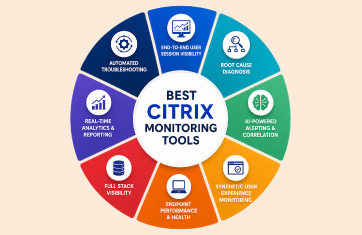
Monitoring Citrix License Activation Service
Monitoring LAS is important because licensing now depends on both the local License Server and cloud connectivity. A healthy environment should show successful activation, stable Citrix Cloud communication, and no recurring licensing errors.
Monitor License Server availability
Track whether the Citrix License Server is running and reachable, because an unavailable server can interrupt licensing operations. Monitoring availability helps teams detect service outages before they affect users.
Track Citrix Cloud connectivity
Since LAS validates licenses through Citrix Cloud, connectivity failures should be treated as a key alert condition. Monitoring outbound connectivity can help isolate whether issues are caused by DNS, proxy, firewall, or cloud access problems.
Detect activation failures
Activation failures are one of the clearest indicators that LAS is not working correctly. Alerting on failed activations helps administrators respond before licensing disruptions affect production.
Monitor licensing health
Track overall license status, sync freshness, and any warnings related to entitlement validation. Citrix’s LAS model is cloud-managed, so health monitoring should focus on both local state and remote validation status.
Configure proactive alerts
Set alerts for connectivity loss, registration failures, activation errors, and stale license updates. Proactive notifications reduce the risk of discovering a licensing problem only after users are impacted.
Citrix LAS vs File-Based Licensing
| Citrix LAS | File-Based Licensing |
| Automatic cloud activation | Manual license files |
| Automatic license validation | Manual renewals |
| Cloud-managed licensing | Static licensing |
| License caching for continuity | Limited resilience |
| Simplified license management | Higher administrative effort |
Conclusion
As Citrix phases out file‑based licensing on April 15, 2026, the shift to the License Activation Service (LAS) is no longer optional—it’s essential. By understanding how LAS works, upgrading to supported versions, and preparing your environments now, you can ensure a smooth transition with no disruption to operations. If you haven’t already begun, now is the time to act so your Citrix deployment remains secure, supported, and future‑ready.
Hopefully this blog has given you all the information you need to prepare for the advent of Citrix LAS, but do consider also checking out the full webinar recording, as George and I covered a lot of other Citrix updates that are useful to be up-to-date with.
eG Enterprise is an Observability solution for Modern IT. Monitor digital workspaces,
web applications, SaaS services, cloud and containers from a single pane of glass.
eG Enterprise is an Observability solution for Modern IT. Monitor digital workspaces,
web applications, SaaS services, cloud and containers from a single pane of glass.
Frequently Asked Questions
Citrix License Activation Service is Citrix’s cloud-based licensing model that replaces traditional file-based licensing for supported products. It simplifies activation by validating licenses through Citrix Cloud instead of relying on manual license files.
File-based licensing depends on manually downloading, installing, and renewing license files on the License Server. LAS automates license activation and validation through the cloud, reducing administrative effort and improving renewal continuity.
You can verify LAS by checking license server status, confirming successful Citrix Cloud registration, and validating that the environment shows active licensing without errors. A healthy setup should also show consistent synchronization and no repeated activation failures.
If connectivity is lost, LAS may continue temporarily through cached license data, depending on the product and licensing state. However, prolonged connectivity loss can prevent renewals, updates, and validation, so monitoring connectivity is important.
Citrix LAS support depends on the product and version, and it is available for supported Citrix licensing environments such as Citrix Virtual Apps and Desktops and NetScaler/ADC. Product compatibility should always be confirmed before migration.
Common challenges include firewall or network blocks, unsupported product versions, cloud registration issues, and license synchronization errors. Planning upgrades and testing connectivity early helps reduce migration risk.
License caching allows the environment to keep operating for a period even if the License Server cannot reach Citrix Cloud. This provides continuity, but it is not a substitute for restoring cloud connectivity and should be treated as a temporary safeguard.
Use the eG Enterprise solution to monitor service availability, cloud connectivity, activation status, sync freshness, and error events. Proactive alerting is useful for detecting issues before they disrupt licensing operations.