
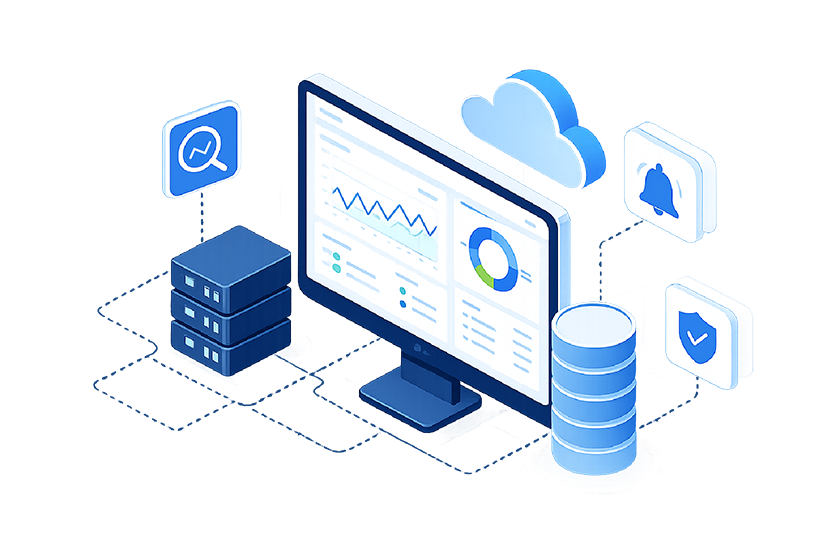
As enterprise IT environments become increasingly distributed, monitoring infrastructure performance is more challenging than ever. Organizations must manage on-premises systems, cloud services, virtualized environments, databases, networks, containers, and digital workspaces from a unified operational framework. This growing complexity has elevated the importance of modern infrastructure monitoring tools that provide end-to-end visibility, proactive alerting, and intelligent diagnostics.
The right infrastructure monitoring software helps prevent outages while improving operational efficiency, speeding troubleshooting, and supporting capacity planning and business continuity. In this guide, we’ll explore what infrastructure monitoring entails, the capabilities enterprises should prioritize in 2026, and the leading platforms worth evaluating.
What is Infrastructure Monitoring?
Infrastructure monitoring is the continuous process of tracking the health, performance, availability, and utilization of IT infrastructure components to ensure optimal service delivery and business operations.
Modern infrastructure monitoring extends far beyond server monitoring. Today’s enterprises require visibility across physical, virtual, cloud, and hybrid ecosystems to effectively manage application performance and digital experiences.
Infrastructure Components to Monitor
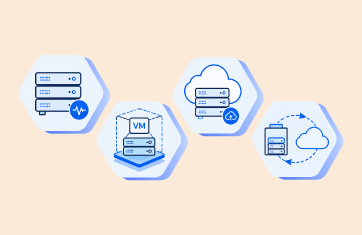
Servers
Monitoring server CPU utilization, memory consumption, disk performance, processes, and operating system health helps organizations maintain performance and prevent resource bottlenecks.
Storage Infrastructure Monitoring
Storage monitoring ensures adequate capacity, optimal throughput, low latency, and reliable data access across storage arrays, SANs, NAS environments, and cloud storage services.
Networks
Network monitoring helps identify bandwidth constraints, connectivity issues, packet loss, latency, and device failures that can affect application performance.
Databases
Databases often support mission-critical workloads. Monitoring query performance, transactions, replication, locks, and resource utilization is essential for maintaining responsiveness.
Cloud Infrastructure
Cloud monitoring provides visibility into workloads running across public, private, hybrid, and multi-cloud environments, enabling organizations to maintain performance and control costs.
Virtual Machines
Virtualized infrastructures require monitoring of hypervisors, virtual machines, resource allocation, and workload distribution to ensure efficient utilization.
Why It Matters for Modern Enterprises
Business Continuity
Infrastructure monitoring enables organizations to detect and resolve issues before they disrupt critical business services.
Performance Optimization
Continuous visibility allows IT teams to identify inefficiencies and optimize application delivery.
Capacity Planning
Historical trends and utilization data help organizations forecast future infrastructure requirements and avoid unexpected resource shortages.
Reduced Downtime
Proactive monitoring and intelligent alerting help shorten incident resolution times and reduce the frequency of service disruptions.
Modern Infrastructure Monitoring Requirements
As IT environments evolve, infrastructure monitoring requirements continue to expand.
Hybrid Infrastructure
Many organizations operate a mix of on-premises and cloud systems. Monitoring solutions must provide unified visibility across both environments.
Multi-Cloud Visibility
Enterprise workloads increasingly span multiple cloud providers. Monitoring platforms should deliver centralized visibility across diverse cloud ecosystems.

AI-Assisted Monitoring
Modern platforms use AI and automated analytics to identify anomalies, correlate events, and reduce alert noise.
Enterprise Scalability
Monitoring systems must handle increasing numbers of applications, devices, cloud resources, virtual machines, and users without sacrificing performance.
Automation
Automated discovery, intelligent dependency mapping, root-cause analysis, and remediation workflows help reduce operational overhead.
Infrastructure Monitoring Evaluation Checklist
Before selecting an infrastructure monitoring platform, enterprises should evaluate the following capabilities:
Deployment Model
- SaaS
- On-premises
- Hybrid deployment options
Integrations
Support for cloud platforms, databases, virtualization technologies, helpdesk solutions, DevOps tools, and enterprise applications.
Dashboards
Customizable dashboards that provide role-based visibility and operational insights.
Automation
Automated discovery, dependency mapping, alert correlation, and incident management capabilities.
Reporting
Comprehensive reporting for performance analysis, capacity planning, SLA management, and executive visibility.
Security
Role-based access controls, compliance support, audit logging, and secure deployment models.
Pricing
Organizations should evaluate overall cost of ownership, including licensing, implementation, maintenance, and operational complexity.
Top Infrastructure Monitoring Tools
eG Enterprise is a unified observability and infrastructure monitoring platform designed for complex enterprise environments. The platform provides unified visibility across applications, servers, databases, virtualization layers, networks, cloud deployments, digital workspaces, and user experience from a single console.
eG Enterprise supports on-premises, cloud, hybrid, and multi-cloud environments while using automated correlation and AI-driven analytics to accelerate root-cause diagnosis. Because eG Enterprise maps dependencies across every tier automatically, it points to the specific server, database, network, or virtualization layer behind a slow service, instead of leaving teams to line up separate dashboards by hand.
Key Strengths
- Comprehensive infrastructure, application, and user experience monitoring
- Hybrid and multi-cloud visibility
- Automated root-cause analysis
- AI-assisted performance diagnostics
- Strong support for virtualization and digital workspace technologies
- Unified monitoring across 650+ supported technologies
How to Select the Right Platform
Organization Size
Large enterprises typically require advanced scalability, automation, governance, and multi-team collaboration capabilities.
Existing Monitoring Stack
Assess whether the solution can integrate with current monitoring, ITSM, DevOps, and observability tools.
Budget
Evaluate both licensing costs and staffing, maintenance, training, and infrastructure expenses.
Compliance
Ensure the platform supports industry-specific security and compliance requirements. Look for solutions that meet frameworks and compliance standards such as ISO/IEC 27001:2022 and SOC 2.
Future Growth
Select a solution capable of scaling alongside expanding infrastructure, cloud adoption, and digital transformation initiatives.
Future Trends
AI-Powered Observability
Artificial intelligence will increasingly automate anomaly detection, root-cause analysis, and operational decision-making.
Predictive Analytics
Organizations will move beyond reactive monitoring toward predictive performance management and capacity forecasting.
Automation
Automated remediation and self-healing workflows will become core capabilities of modern monitoring platforms.
Unified Monitoring Platforms
The future belongs to platforms that combine infrastructure monitoring, application performance monitoring, digital experience monitoring, logs, metrics, and traces within a single observability ecosystem. This aligns closely with the eG Enterprise vision of converged monitoring across infrastructure, applications, cloud environments, and user experience.
Conclusion
As enterprise infrastructures continue to grow in complexity, selecting the right infrastructure monitoring tools is critical to maintaining performance, availability, and operational efficiency. Modern organizations require more than basic monitoring; they need unified visibility, intelligent analytics, automation, and end-to-end observability.
Among the infrastructure monitoring software platforms available today, eG Enterprise stands out for its ability to deliver comprehensive visibility across servers, storage, databases, networks, virtualization, cloud services, digital workspaces, and application performance from a single platform. With strong hybrid-cloud capabilities, automated root-cause diagnostics, and AI-driven insights, it is particularly well-suited for enterprises preparing for the demands of 2026 and beyond.
Next Steps
Learn more about eG Enterprise capabilities for infrastructure monitoring, see: IT Infrastructure Monitoring Tool for Performance.
eG Enterprise is an Observability solution for Modern IT. Monitor digital workspaces,
web applications, SaaS services, cloud and containers from a single pane of glass.
Frequently Asked Questions
Infrastructure monitoring is the process of continuously tracking the performance, availability, health, and utilization of IT infrastructure components such as servers, storage, databases, networks, cloud resources, and virtual machines.
Key metrics include CPU utilization, memory usage, disk performance, storage capacity, network latency, packet loss, database response times, application availability, cloud resource consumption, and user experience indicators.
Organizations should look for hybrid-cloud visibility, automation, AI-assisted analytics, customizable dashboards, reporting, integrations, alerting, security controls, and root-cause analysis capabilities.
Evaluate the platform based on your infrastructure complexity, organizational size, deployment preferences, budget, compliance requirements, integration needs, and long-term growth objectives. Solutions such as eG Enterprise are well-suited for enterprises seeking unified observability and unified infrastructure monitoring.