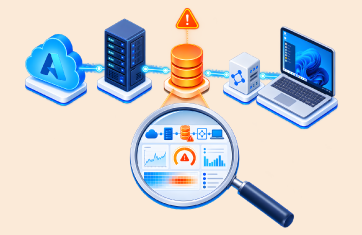
Digital Employee Experience (DEX) refers to how employees interact with the digital tools, systems, and technologies they use at work-and how those interactions affect their productivity, satisfaction, and overall work experience. DEX encompasses the quality of the digital interactions and services that employees encounter while using workplace technologies. It includes various factors such as application performance, network connectivity, device usability, and overall user satisfaction. DEX monitoring aims to ensure that employees can effectively and efficiently perform their tasks with minimal disruptions, thus enhancing productivity and satisfaction within the workforce.
Organizations measure and improve DEX by monitoring factors such as device performance, software usability, network connectivity, application reliability, and employee feedback. Modern DEX platforms use analytics and automation to identify and fix issues before they impact users.
A strong DEX strategy helps companies:
- Boost employee productivity and engagement.
- Reduce IT support tickets and downtime.
- Improve retention by creating a better work environment.
DEX very much focuses on the employee’s digital journey—making sure every interaction with workplace technology is seamless, efficient, and supports overall well-being and productivity.
How DEX Works
DEX focuses on the end-to-end experience employees have with:
- laptops, mobile devices, apps
- collaboration tools (Teams, Slack, Zoom)
- HR and productivity systems
- service desks and IT support
- digital workflows
- cloud platforms
As such DEX is largely associated with how employees feel about the digital workplace tools they use every day rather than just IT metrics such as the uptime of systems. Gartner reported that through 2027, 80% of digital employee experience (DEX) tool deployments that account only for IT-focused use cases will fail to achieve a sustainable ROI and that 75% of organizations without a DEX strategy and tool will fail to successfully reduce digital friction.
Moreover, Gartner also reported that by 2028, digital workplace teams that have fully implemented a DEX tool will carry half the backlog of those that have not. Reducing support tickets is a fundamental core measure of a DEX strategy. Beyond reducing downtime DEX strategies can reduce employee reports to IT teams through a range of mechanisms such as auto-remediation and automatically informing users when issues do arise.
Key Features of a DEX Platform
DEX tools usually include ITSM integrations with systems such as ServiceNow, PagerDuty and JIRA to automatically manage support tickets from DEX systems and to automate the management and synchronization of IT alerts to support tickets. Efficient support ticket processing is key to any DEX strategy but ultimately you don’t want employees having to raise tickets.
Skilled staff and their retention are now critical to the success of an organization and DEX is a crucial component to get right.
Benefits of DEX
DEX for Hybrid Work & IT Efficiency
Having a strategy to improve and manage DEX makes sound business sense because productivity depends upon having good digital tools. Slow laptops, broken apps, flaky Wi-Fi, login issues or complex workflows reduces employee productivity. Improving DEX means that employees will work faster, smoother and with fewer interruptions.
In turn, better DEX leads to higher employee engagement because employees who have great digital experiences will feel less frustrated, more empowered and are more likely to engage with their work. On the other hand, bad digital experiences and a poor DEX can be a major cause of low morale and lead to employee turnover.
A strong DEX management strategy can significantly reduce IT support costs. Good DEX tooling can facilitate fewer helpdesk tickets, faster resolution times and the proactive detection of issues. Auto-remediation features within DEX platforms can significantly lower operational costs further.
DEX management improves hybrid and remote working. As organizations move to hybrid and remote work models, digital tools become the primary “workplace”. This means strong DEX management must be in place to ensure reliable access, smooth collaboration and effective communication. A good DEX facilitates people working with people and influences employee emotions.
Employees expect modern and reliable tools. Strong DEX management increases staff retention and can even attract talent. Nobody wants to work with broken tools or tools that cause them to underperform and poor digital experiences can be a significant factor for employees to seek alternative employment.
Overall a company with a strong DEX management strategy should see significant benefits and improvements in:
- productivity KPIs
- customer satisfaction
- innovation
- business agility
Ultimately good digital experiences drive good business outcomes.
Key Takeaways
In simple term DEX is about making sure employees have the best possible digital environments to do their jobs effectively and strong DEX means:
- happy, productive employees
- lower IT costs
- better business outcomes
Conversely, a weak Digital Employee Experience means:
eG Enterprise is an Observability solution for Modern IT. Monitor digital workspaces,
web applications, SaaS services, cloud and containers from a single pane of glass.
- frustration
- downtime
- inefficiency
- higher employee turnover
eG Enterprise is an Observability solution for Modern IT. Monitor digital workspaces,
web applications, SaaS services, cloud and containers from a single pane of glass.
Frequently Asked Questions
Digital Employee Experience (DEX) is the overall quality of an employee’s interactions with the digital tools, applications, devices, and services they use to do their work. eG Enterprise helps organizations measure DEX by correlating what users experience with the performance of endpoints, applications, networks, VDI, SaaS, cloud, and infrastructure.
DEX is important because poor digital experiences can reduce productivity, increase frustration, and negatively affect retention. eG Enterprise helps businesses reduce digital friction by giving IT teams the visibility needed to resolve issues faster and keep employees productive across hybrid and remote work environments.
The key benefits of DEX include better productivity, lower support costs, improved employee satisfaction, and stronger retention. With eG Enterprise, these benefits are supported by unified observability, proactive issue detection, and faster root-cause analysis across the digital workplace.
DEX improves productivity by reducing the time employees spend dealing with slow logins, app issues, and connectivity problems. eG Enterprise improves this further by monitoring the full chain of user experience so IT can find and fix the real cause of friction before it disrupts work.
A DEX platform should provide real-time experience monitoring, analytics, root-cause analysis, self-healing automation, and support for endpoints, applications, and collaboration tools. eG Enterprise adds end-to-end visibility, synthetic and real-user monitoring, and AIOps-driven diagnostics to help IT manage experience proactively.
DEX reduces IT support costs by helping IT detect issues early, automate remediation, and lower help desk ticket volumes. eG Enterprise supports this by correlating alerts across layers and enabling quicker resolution, which reduces manual troubleshooting and repetitive support work.
Organizations measure DEX using telemetry from endpoints, applications, networks, and user feedback, along with experience scoring and benchmarking. eG Enterprise brings these signals together into a unified view so teams can track trends, identify problem areas, and improve the employee experience over time.